Cloud vs On-Premise Business Software for Nigerian SMEs: What’s Best?
Compare cloud vs on-premise business software for Nigerian SMEs. Learn which option saves costs, improves security, and fits your business needs.

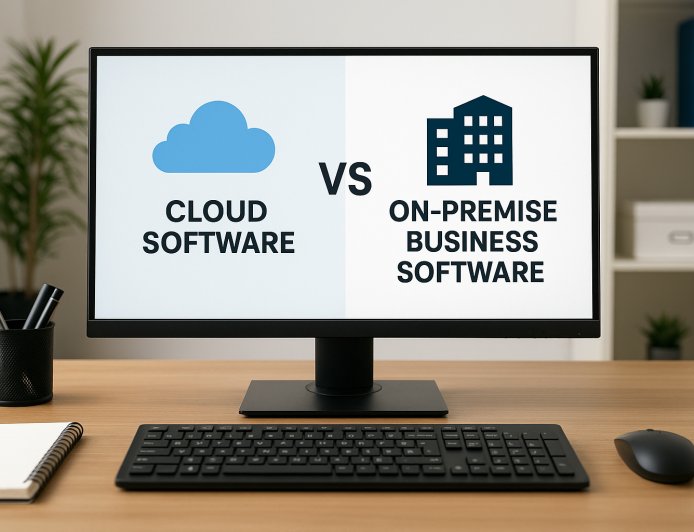

As Nigerian businesses grow and digitize, one of the biggest questions owners face is:
Should I use cloud-based or on-premise business software?
From accounting to HR, CRM, and POS — software is now central to business efficiency. But choosing the right setup can affect your costs, data security, and scalability.
Let’s explore the differences, benefits, and what works best for Nigerian SMEs.
What Is On-Premise Software?
On-premise software is installed directly on your company’s computers or servers.
You buy the license once and host everything locally.
Pros:
-
Full control over your data and system.
-
Works without constant internet access.
-
May be preferred for highly regulated industries (like finance or healthcare).
Cons:
-
High upfront cost (hardware, licenses, setup).
-
Requires technical staff for maintenance and updates.
-
Data loss risk if your system crashes or is stolen.
-
Hard to scale when your business grows.
Example: A Lagos manufacturer that uses a server-based accounting software in its office.
What Is Cloud-Based Software?
Cloud software runs on remote servers accessed through the internet.
Your data is stored securely online, and you pay a monthly or annual subscription.
Pros:
-
Accessible from anywhere — office, home, or mobile.
-
Automatic updates and backups.
-
Lower upfront costs — pay as you grow.
-
Perfect for businesses with multiple outlets or remote teams.
-
Data remains safe even if your laptop or POS is stolen.
Cons:
-
Requires stable internet connection (though many systems offer offline backup).
-
Subscription costs can add up over time.
Example: A retail chain using Salesmanager Cloud Suite to monitor sales and inventory across all branches.
Key Comparison Table
| Feature | Cloud Software | On-Premise Software |
|---|---|---|
| Cost | Low upfront, subscription-based | High upfront, one-time license |
| Accessibility | Any device, anywhere | Only on installed computers |
| Updates | Automatic and frequent | Manual, often expensive |
| Data Backup | Cloud storage (auto backup) | Manual or local |
| Maintenance | Handled by vendor | Managed by in-house IT |
| Scalability | Easy to add users/features | Complex and costly |
| Security | Advanced encryption, remote protection | Dependent on local security measures |
Which Is Best for Nigerian SMEs?

For most Nigerian small and medium-sized enterprises, cloud-based software wins — hands down.
Here’s why:
-
Lower setup cost – no need to buy servers or heavy hardware.
-
Remote monitoring – track sales or reports even while traveling.
-
Automatic backups – protect your business from data loss.
-
Scalability – start small and expand easily.
However, if your business operates in areas with poor internet coverage, or you have strict compliance needs, an on-premise or hybrid solution may be ideal.
Final Verdict
✅ Choose Cloud Software if you want flexibility, remote access, and affordable scalability.
⚙️ Choose On-Premise Software if you require absolute control and operate in a secure offline environment.
For Nigerian SMEs, hybrid systems like Salesmanager Cloud Suite give you the best of both worlds — access anywhere, plus local data backup options for peace of mind.
Ready to Upgrade your Business Sofeware to cloud at salesmanager.com.ng
What's Your Reaction?
 Like
0
Like
0
 Dislike
0
Dislike
0
 Love
0
Love
0
 Funny
0
Funny
0
 Angry
0
Angry
0
 Sad
0
Sad
0
 Wow
0
Wow
0